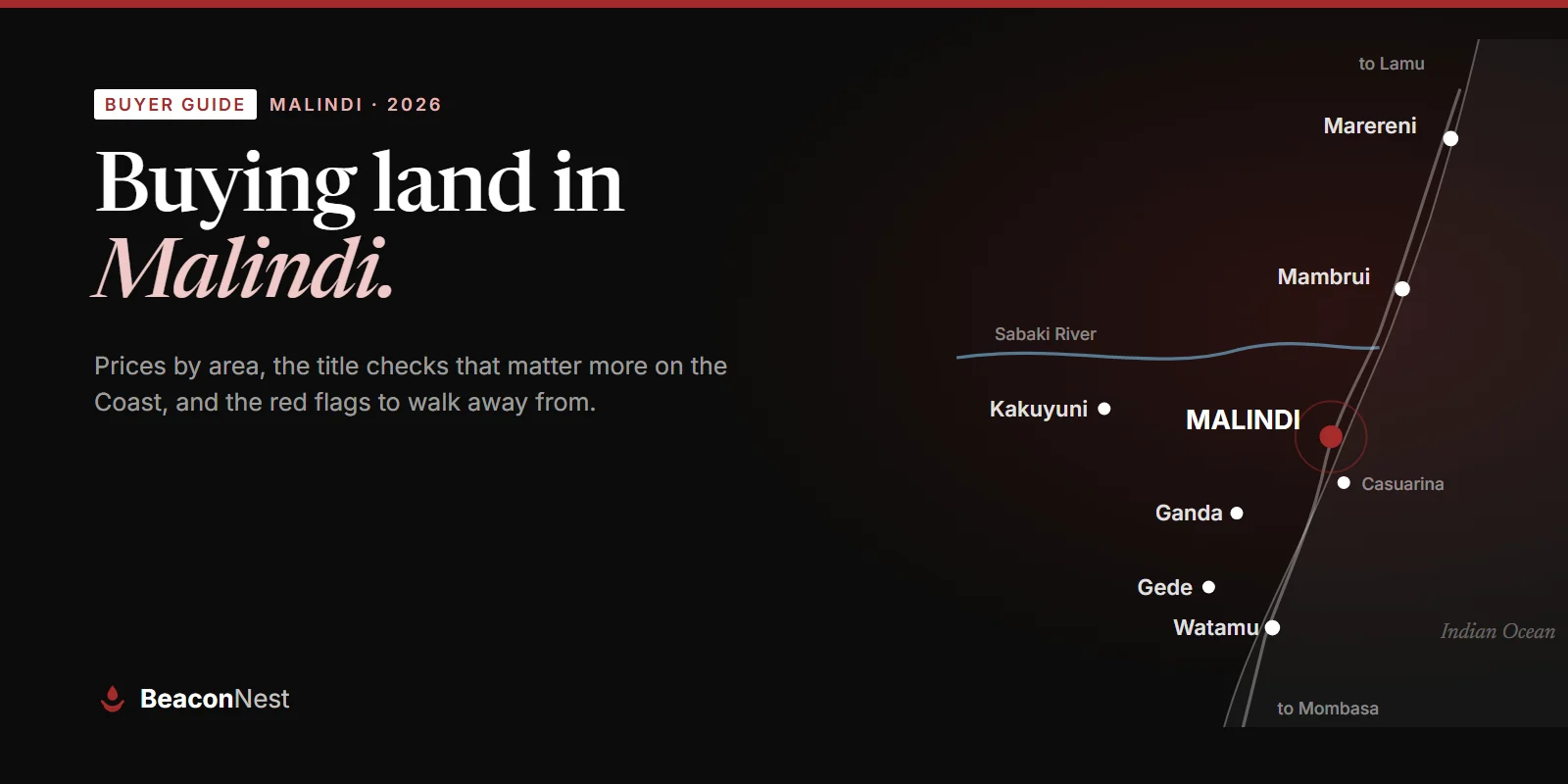
Buying land in Malindi: prices, areas and the checks that protect you.
What land costs from Watamu to Marereni, why title checks matter more on the Coast, the ten checks before you pay, and the red flags to walk away from.
Read the GuideNotes on land, development economics and the Kenyan property market, written for landowners, investors and buyers rather than for search engines.
What land costs from Watamu to Marereni, why title checks matter more on the Coast, the ten checks before you pay, and the red flags to walk away from.
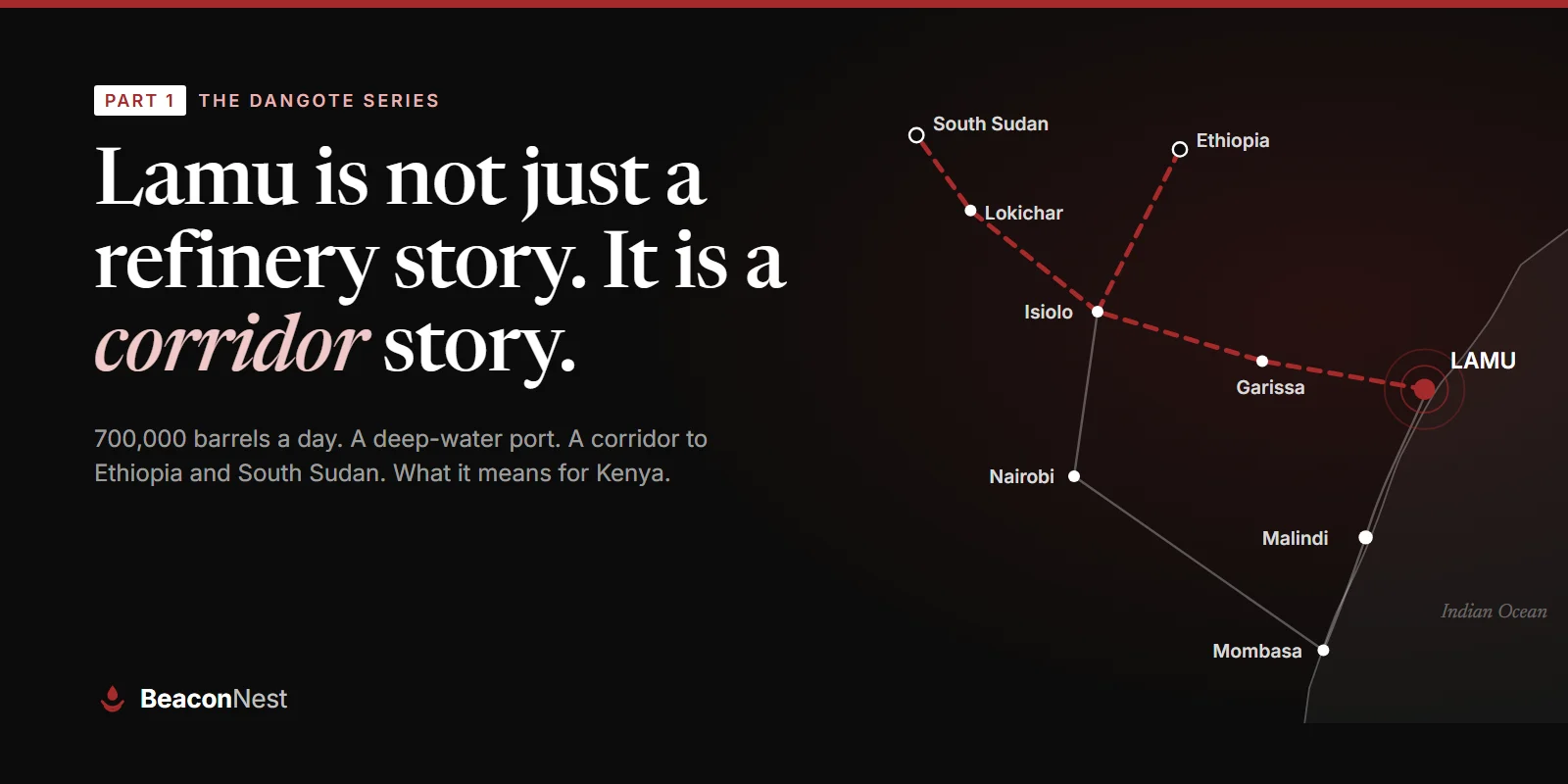
Read the GuideA 700,000 barrel-a-day refinery, a deep-water port and a corridor to Ethiopia and South Sudan. What is being built, what it means for jobs, housing and the Coast, and how ordinary Kenyans can take part.
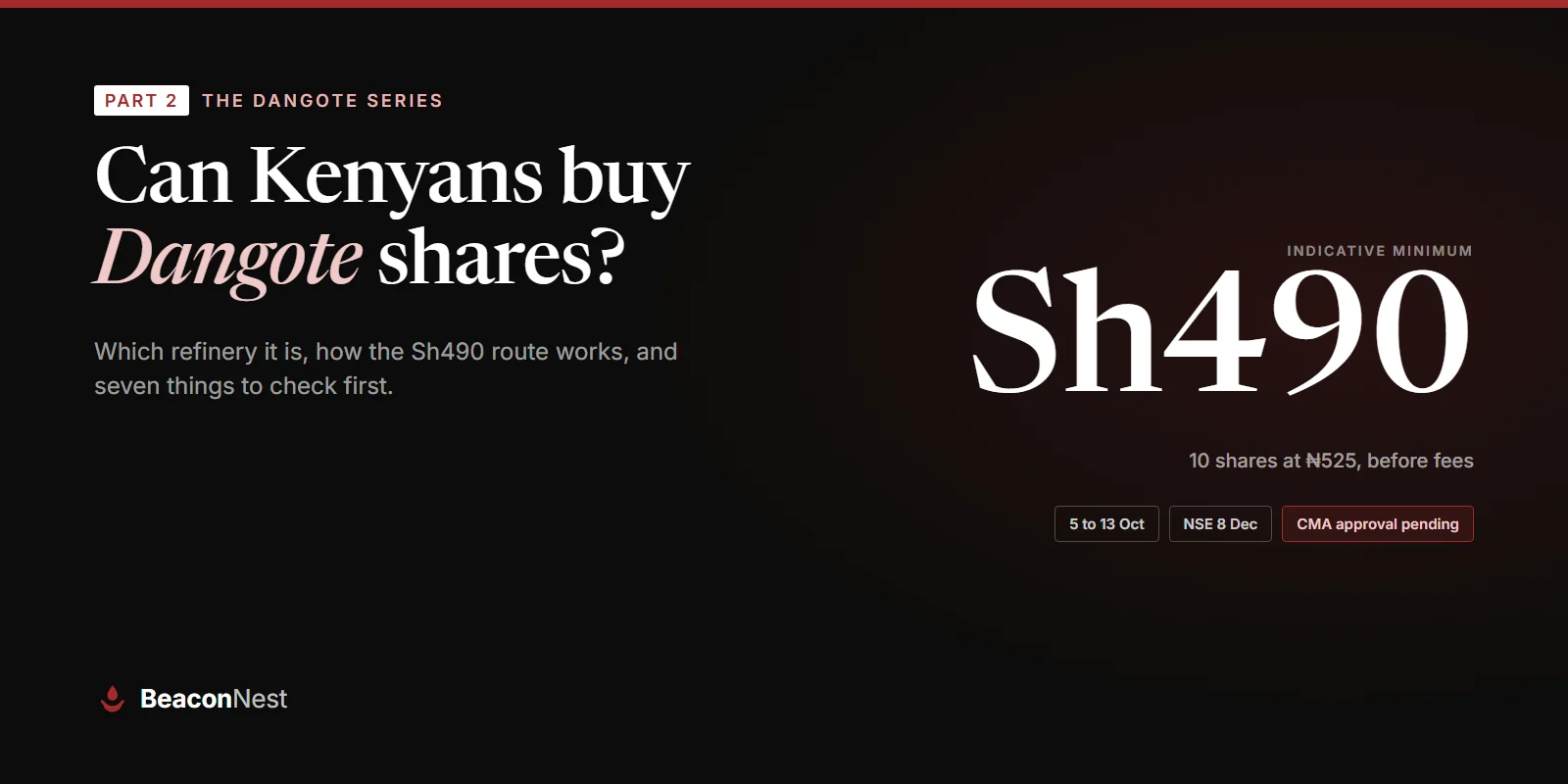
Read the ArticleKenyans may soon own part of Dangote’s Lagos refinery through the NSE. Which refinery it is, how the Sh490 route works, where approval stands and what to check first.
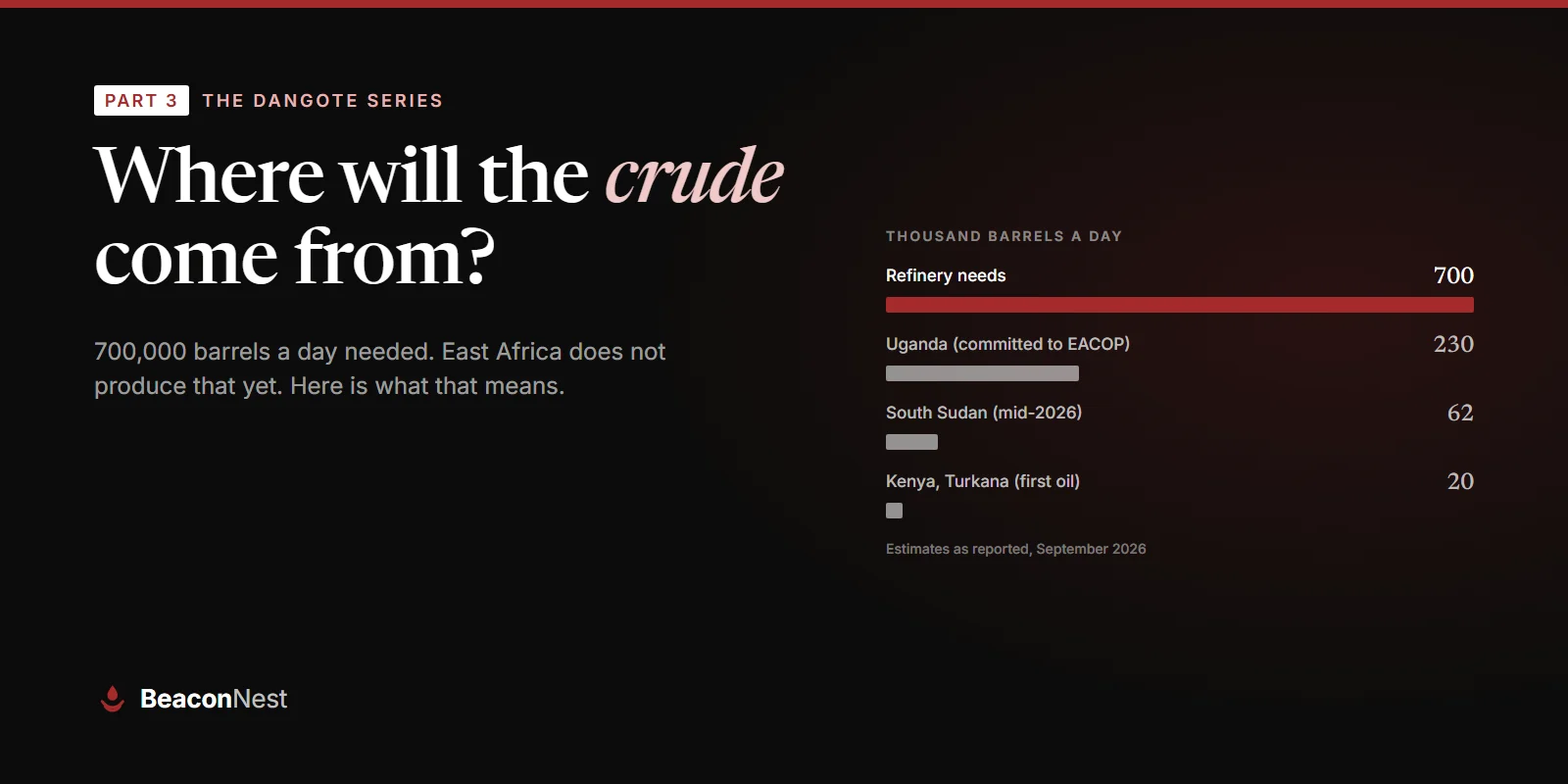
Read the ArticleA 700,000 barrel-a-day refinery needs crude every day. Kenya, Uganda and South Sudan together do not produce that yet. The supply options, and what they mean for investors.
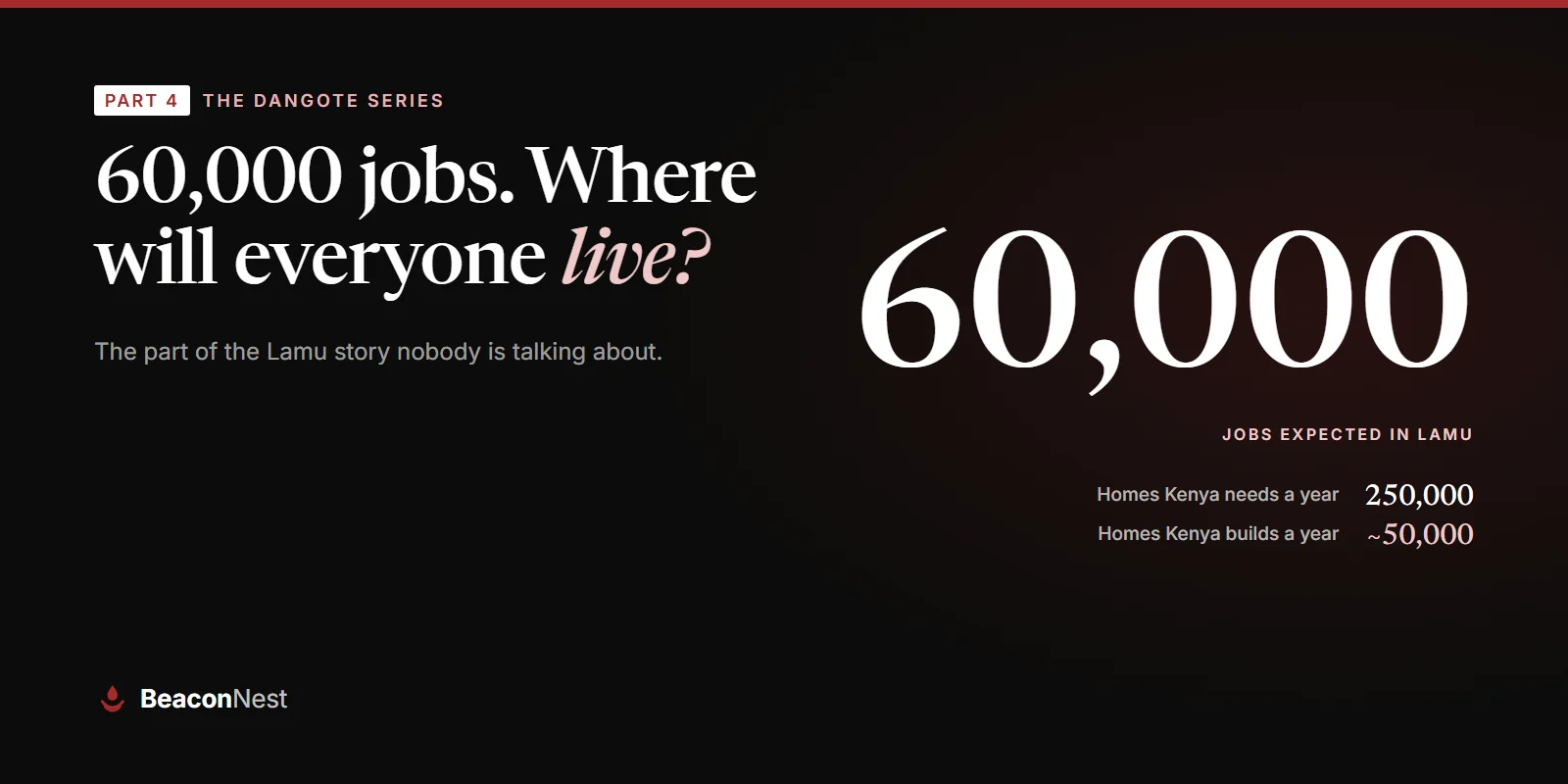
Read the ArticleThe Lamu refinery is expected to create 60,000 construction jobs. Few are asking where those people will live. The housing question, the boom-and-bust risk and what good worker housing looks like.
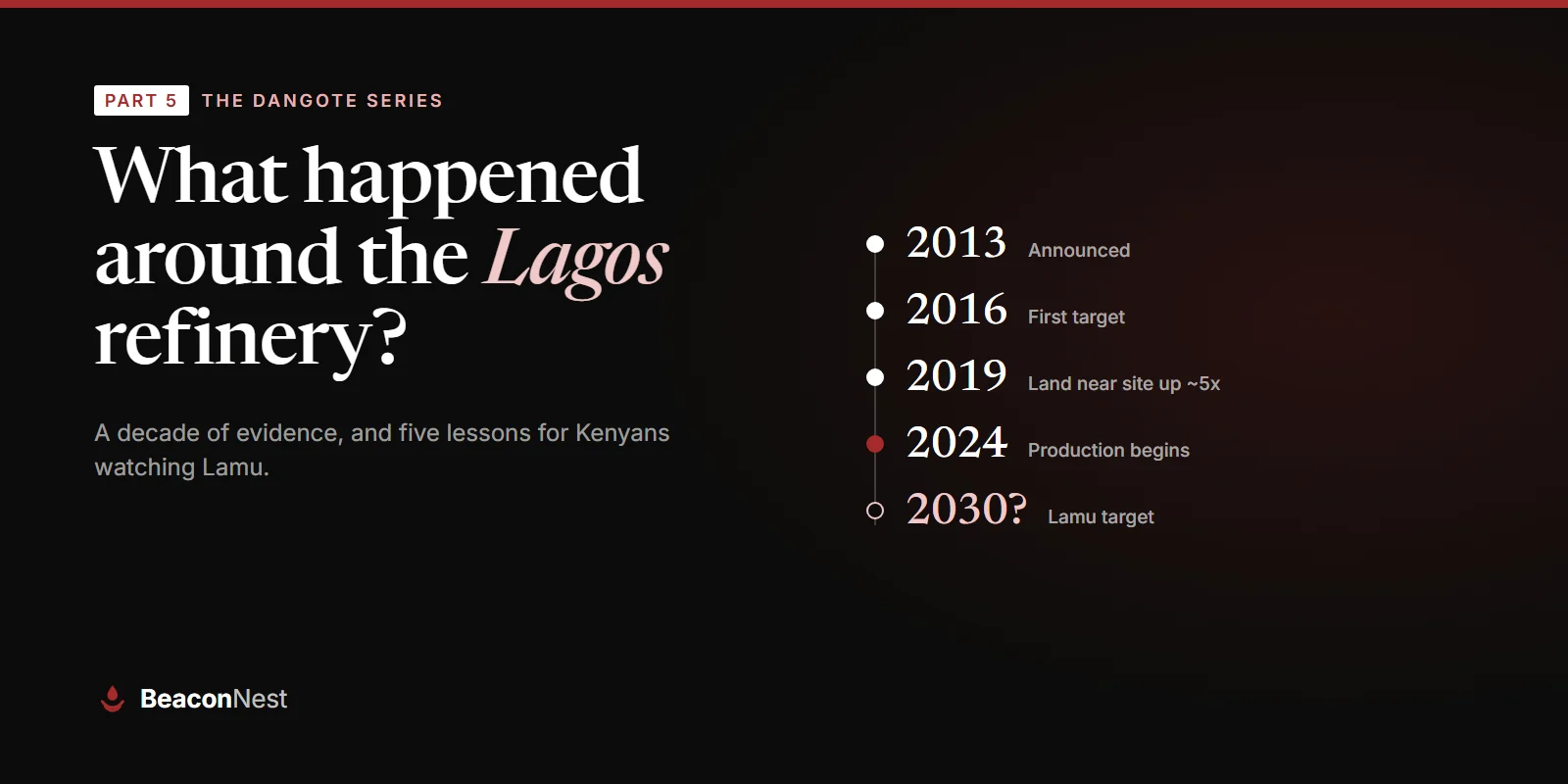
Read the ArticleLagos has lived with a Dangote refinery for a decade. What happened to land, infrastructure and the Lekki corridor around it, and five lessons for Kenyans watching Lamu.
Read the ArticleTokenization could let an investor own a small, legally defined interest in a high-value property without buying the whole thing. We look at what that would mean for Kenya, and what it wouldn't change.
Read the ArticleA development partnership is only as good as the agreement behind it. Before signing anything, a landowner should understand how the site is being valued, how costs and proceeds will be split, what happens if the project is delayed, and who is accountable for what at each stage.
Buying land and betting on appreciation is a different exercise from funding a development. The latter introduces construction, approval, financing and sales risk on top of whatever the underlying land is worth, which is why development returns and land-speculation returns shouldn't be compared directly.
Buying property from abroad removes the option of visiting a site in person before committing. Title verification, approval status, and a developer's track record on previous projects become more important, not less, when the buyer can't easily inspect the ground themselves.
A well-located plot can still fail as a development if the numbers don't work: access, zoning, construction cost and achievable sale price all have to line up together, not just the address.
The price a seller is asking for a parcel and the value that parcel holds once a viable development is built on it are two different calculations. A landowner who understands this distinction is better placed to negotiate a partnership, because it separates what the land is worth today from what it becomes worth once capital, design and approvals are added.
Not every well-located plot suits a mixed-use scheme. Readiness depends on road access and frontage, zoning allowances, the surrounding demand for retail or office space alongside residential units, and whether the site is large enough to separate uses without compromising any of them.
A rental yield figure is only as reliable as the assumptions behind it: achievable rent per square metre, expected occupancy, service charge and maintenance costs, and how quickly units let up after handover. Investors should ask for the assumptions, not just the headline yield.
Research and commentary on Kenyan property, infrastructure and investment. One email when something new is published. No spam.
Please try again, or email info@beaconnesttradings.com.
The next Beacon Nest Insight will come straight to your inbox.